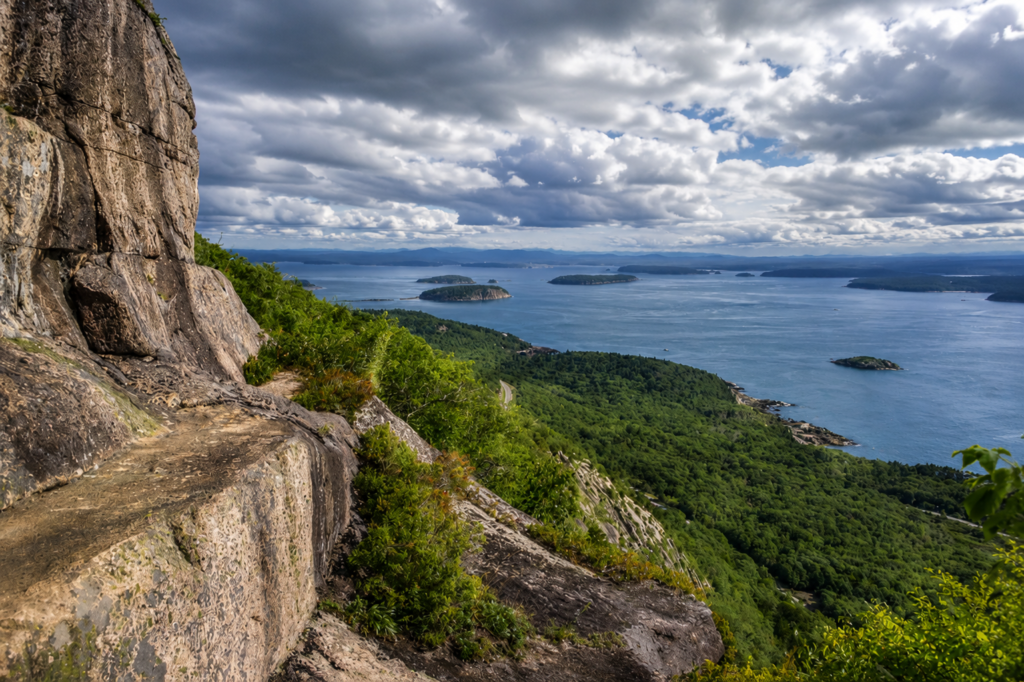
Before anything else: check if it’s even open. This trail closes almost every year from around March 1 through sometime in late July or August, because peregrine falcons nest directly on these cliffs, and Acadia shuts the whole thing down until the chicks fledge. The exact reopening date moves every year depending on the birds, not the calendar. People drive out here in June expecting to hike and find the parking lot barricaded. Check the NPS current conditions page before you leave your hotel, not after you’ve parked.
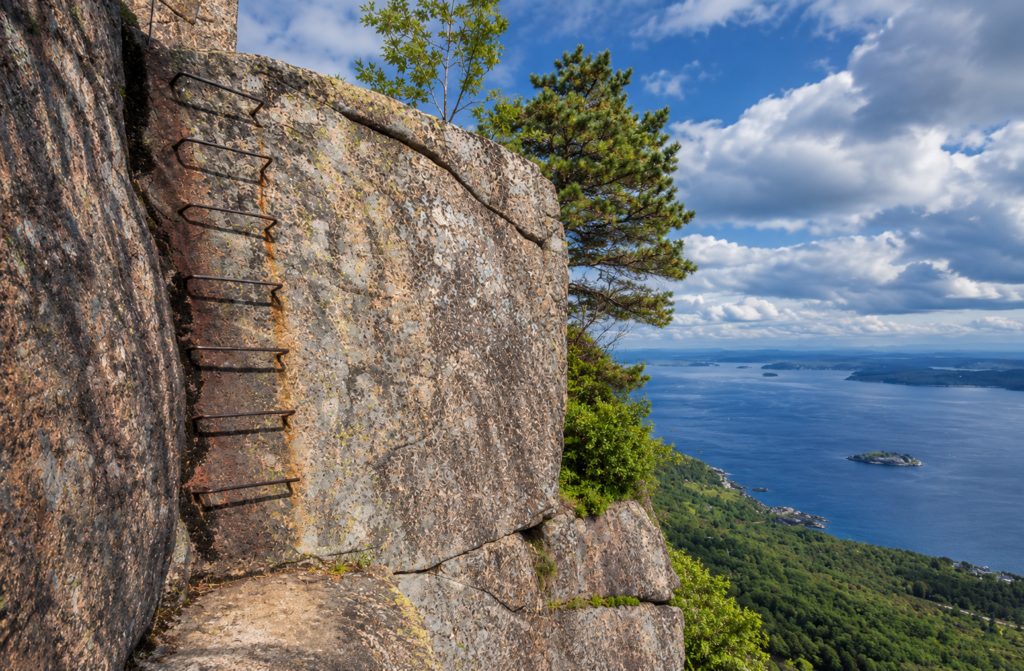
Assuming it’s open: this is a 2.5-mile loop that gains about 1,000 feet, and the numbers undersell it completely. Almost all of that elevation happens in well under a mile, straight up the east face of Champlain Mountain, using iron rungs bolted into open granite with a whole lot of nothing underneath you. People have died on this trail. Not “urban legend died,” actually died, falling from sections with no rungs and no rope, just exposed rock and bad footing. The Park Service posts a warning sign at the base for a reason.
The obstacle that decides whether you keep going
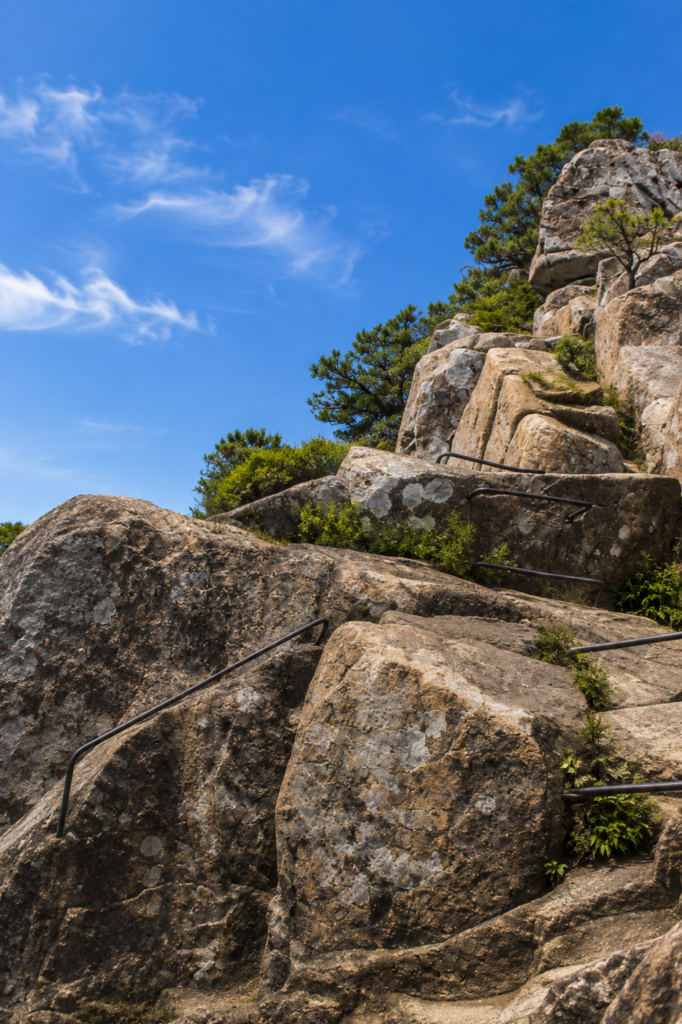
About 500 feet in, you hit two iron rungs bolted awkwardly into a boulder, spaced wrong for anyone under about 5’6″. Some guides call it the Eliminator, some call it the Intimidator, everyone agrees on what it’s for: it’s the trail’s built-in test. If reaching between those two rungs makes you hesitate, that’s the trail telling you the next mile is not going to get easier. People turn around here regularly. Nobody should feel bad about being one of them.
Past that it’s a mix of granite staircases, boulder scrambles, narrow ledges with steel handrails, and a few honest ladder sections bolted straight into the cliff. Leave your trekking poles in the car, you’ll need both hands.
Why it’s shaped like this
The Precipice wasn’t built by the Park Service. It was built before there was a Park Service, by a Princeton professor named Rudolph Brunnow who spent his summers in a cottage near here and chaired the Bar Harbor Village Improvement Association’s path committee from 1912 to 1917. He laid out this route, along with the Beehive and the Orange & Black Path, in an era when wealthy summer residents competed to build the most dramatic trail up the most dramatic cliff. Brunnow died in 1917. His trail is still bolted into the same granite over a century later, and the mountain he built it on used to be called Newport Mountain before it was renamed Champlain.
That’s a strange thing to think about halfway up an iron rung. Somebody’s summer hobby is the reason your hands are gripping this exact piece of metal.
Getting down
Do not go back down the way you came. The Park Service actively discourages descending the Precipice, partly because two-way traffic on a one-person-wide ladder is a bad idea, partly because down-climbing exposed rungs is genuinely more dangerous than climbing up them. From the summit, take the Champlain North Ridge Trail down to the Orange & Black Path, which loops you back to the parking lot. It’s longer than just retracing your steps, and it’s the right call anyway.
Logistics
Trailhead parking is small and fills early in summer, especially since it’s shared with the peregrine viewing area when a naturalist is posted there on weekdays during nesting season. Skip it entirely in the rain. Wet granite and iron rungs are a bad combination, and several of the accident reports on this trail mention wet rock as a factor. If the falcon closure or the exposure rules you out, the Beachcroft Path gets you to the same summit the ordinary way, no rungs required.
Did the Eliminator get you, or did you make it up without breaking stride? Tell us honestly in the comments. 👇