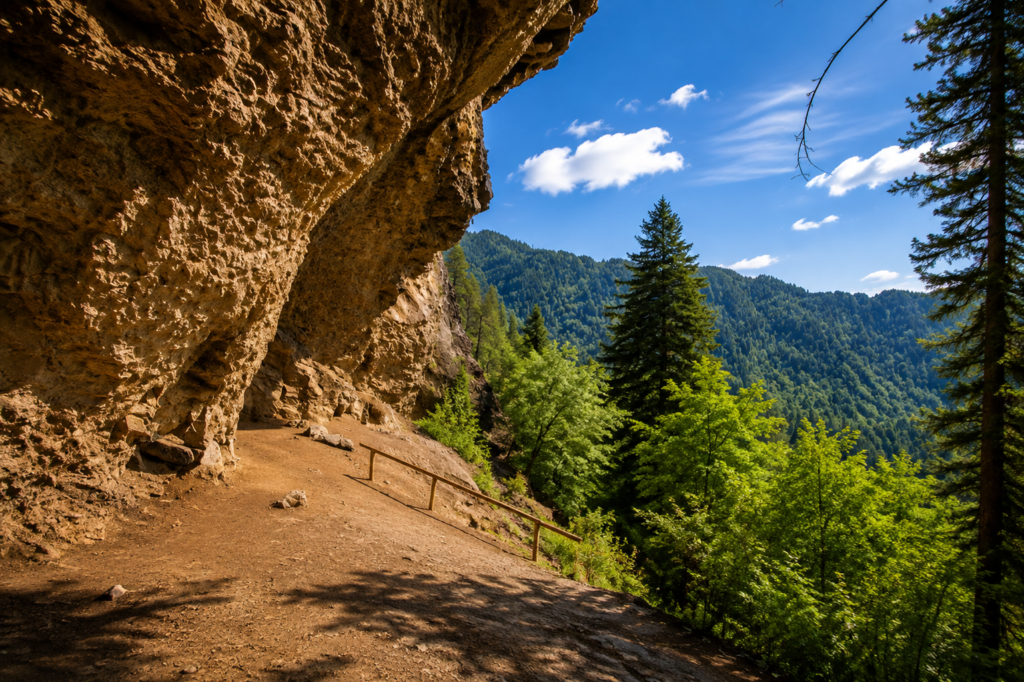
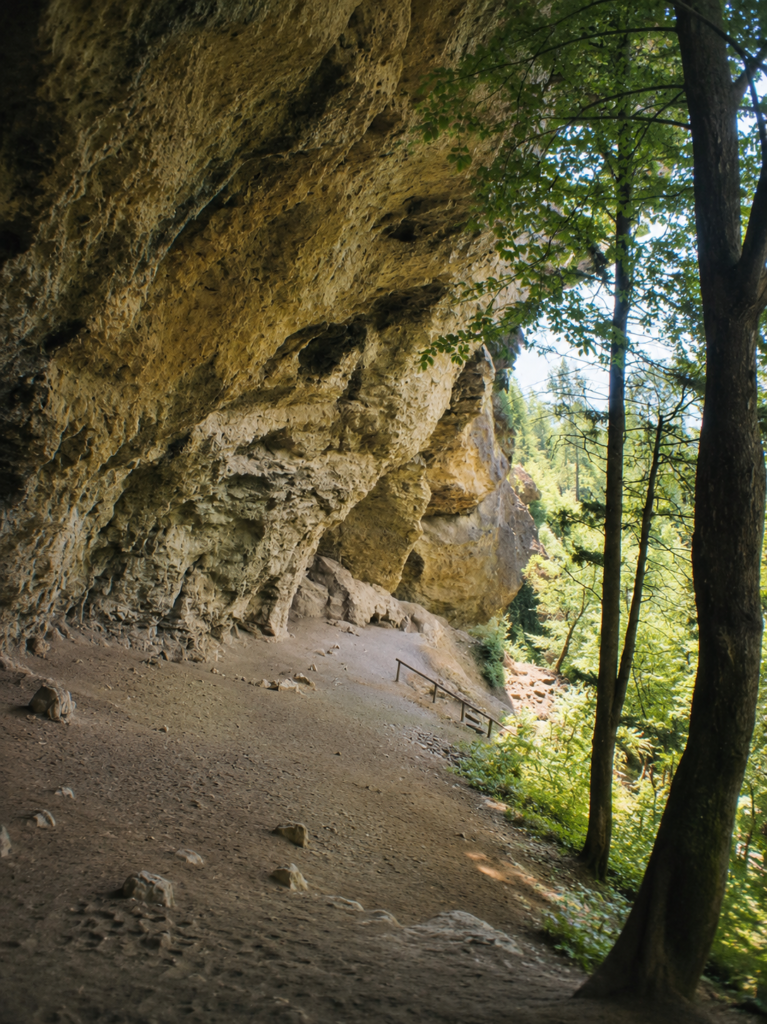
Alum Cave isn’t a cave. It’s a concave bluff, 80 feet high and 500 feet long, curling inward like something took a bite out of the mountain. Everyone who’s ever stood under it points this out, usually right after they’ve called it a cave anyway, because “Alum Cave” is the name on the map and nobody’s renaming it now.
Before it was a photo stop, it was a mine. In 1837, three farmers from North Carolina applied for a land grant covering the bluff and whatever minerals sat in it: alum, magnesia, epsom salt. The Epsom Salts Manufacturing Company formed the next year and worked the deposit until 1854, selling salts that mountain families used, among other things, to dye homespun clothing. Then the Civil War started, and the Confederate Army came back for the saltpeter still in the rock, mining it to make gunpowder. There’s a version of local legend that says a Cherokee leader named Yonaguska, known to English speakers as Drowning Bear, found the bluff first while tracking a bear through these woods, long before any farmer filed paperwork on it. Take that piece as folklore, not fact, since nobody wrote it down until much later. The mining company part is well documented. The bear-tracking part is just a good story that’s been told for a long time.
The hike itself, in three acts
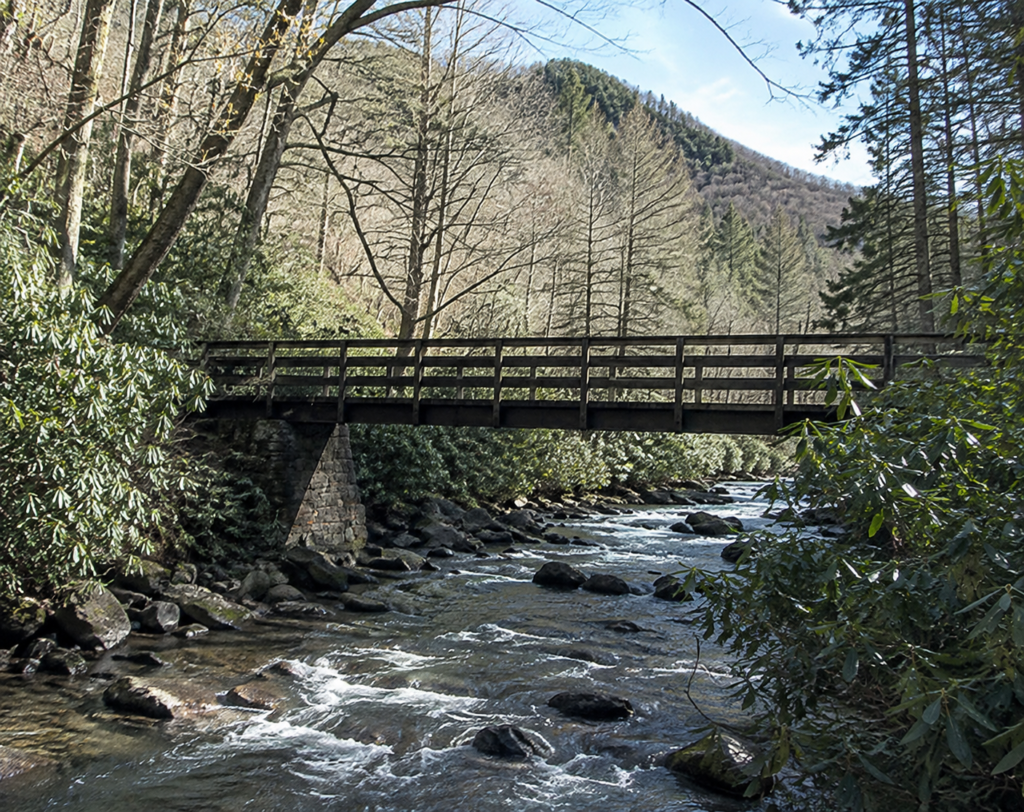
Act one is easy and almost deceptively pleasant: old-growth forest, log bridges over Alum Cave Creek, a gradual climb from the trailhead at about 3,830 feet. At 1.3 to 1.4 miles you walk straight through Arch Rock, a natural stone arch the trail actually tunnels beneath, which is a strange thing to experience the first time and a good excuse to stop and look up.
Act two starts getting real. The trail steepens, narrow ledges show up with cable handrails bolted to the rock for the exposed stretches, and at 2.3 miles you reach the bluff itself. This is where most people turn around, and there’s no shame in that, the round trip to here and back is 4.6 miles and most of the trail’s signature scenery. In winter, check for icicles hanging off the ledge above before you walk under it. They fall. People have been startled badly enough to yell about it, which tells you they’re not small icicles.
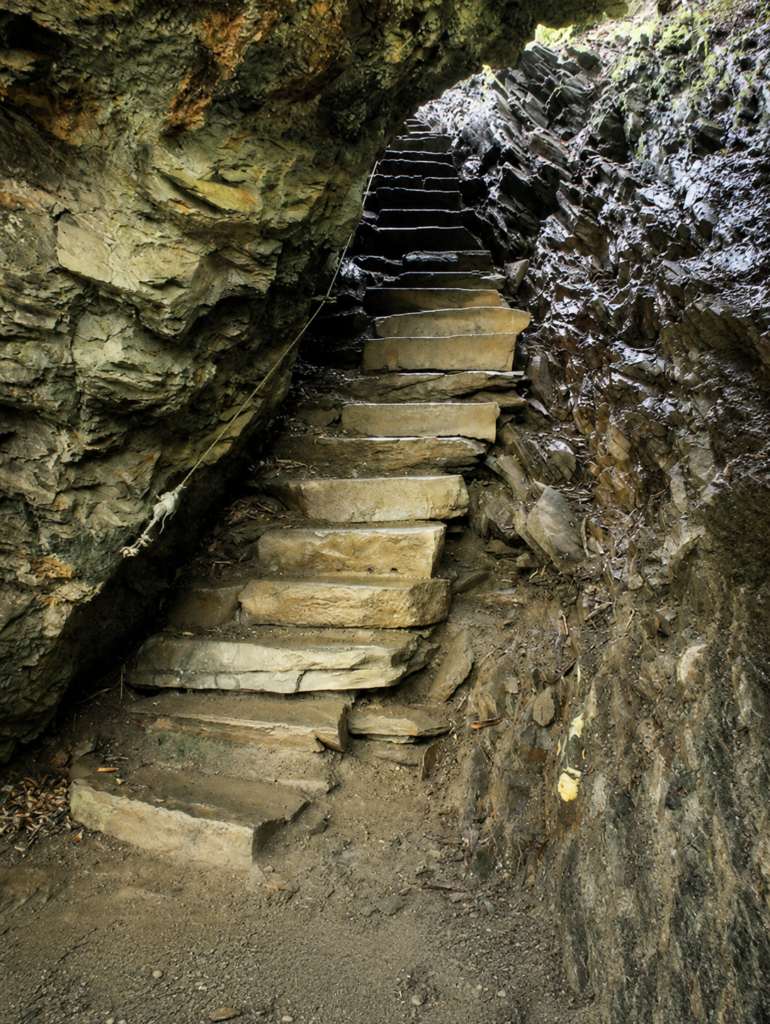
Act three is for people continuing to the summit, and it’s the steepest section of the whole trail, gaining over 1,000 feet in a comparatively short stretch. About 0.4 miles past the bluff you’ll pass Gracie’s Pulpit, a flat rocky outcrop named, as the story goes, for a local woman named Gracie McNichol who kept hiking this trail well into old age. The exact details of her story vary depending which sign or blog you read, so treat the specifics loosely, but the outcrop and the name have stuck regardless.
The numbers for the whole thing
Round trip to Mount LeConte runs 10 to 11 miles depending on which source measured it and exactly where they stopped counting, with somewhere around 2,700 to 2,950 feet of elevation gain. LeConte tops out at 6,593 feet, the third-highest peak in the park, and near the summit you’ll pass LeConte Lodge, the only backcountry lodging in the Smokies, where reservations get booked out months ahead. Don’t expect to just show up and grab a bunk. Do expect the smell of something cooking to be genuinely unfair to smell after nine miles of hiking.
Before you go
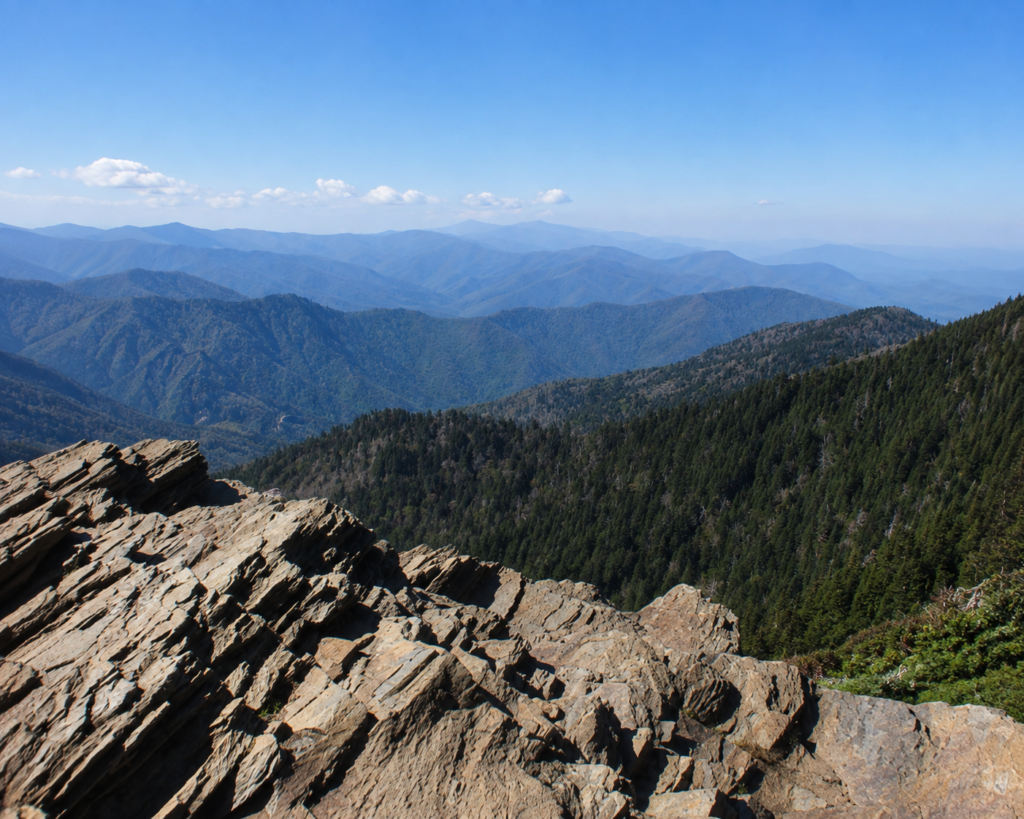
Two paved lots at the trailhead, both known to fill by mid-morning in season. There’s no entrance fee for the park, but Great Smoky Mountains now requires a paid parking tag if you’re leaving your car longer than 15 minutes, purchased online or at a visitor center. Black bears turn up regularly in the lower section between the trailhead and Arch Rock, standard bear-country rules apply. Above 6,000 feet the forest thins into dead standing trees, mostly Fraser firs killed off by an invasive insect and acid rain over the decades, so don’t be alarmed by the ghost-forest look near the top, it’s not fire damage, it’s a slower kind of die-off.
Bluffs only, or all the way to the lodge? And if you made it to Gracie’s Pulpit, did you look up her story afterward like we did? Let us know in the comments. 👇