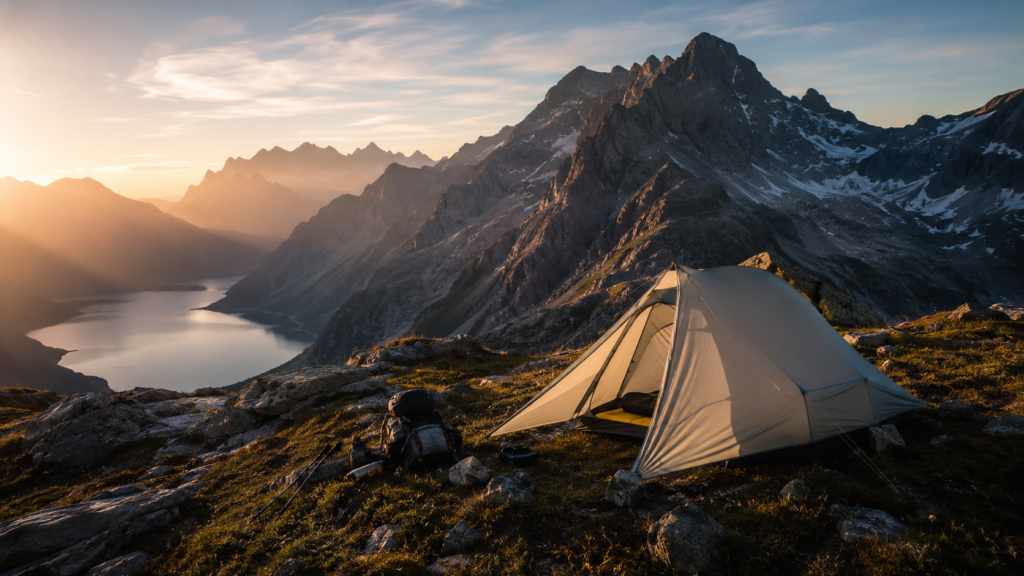
These are the best small backpacking tents I’d look at in 2026 if I wanted to keep pack weight down without turning every night on the trail into a cramped survival exercise. I focused on tents that make sense for one hiker who likes a little extra room or two people traveling light. The picks below were cross-checked against current manufacturer specs, professional testing, and real owner feedback – because the lightest tent on a spreadsheet isn’t always the one you actually want to sleep in after a 15-mile day.
OutdoorGearLab’s 2026 ultralight tent testing alone covered 15 current shelters, while its testers have logged thousands of trail miles and hundreds of nights in lightweight tents.
Quick Pick
- Best overall: Big Agnes Copper Spur UL2
- Best ultralight 2-person tent: NEMO Hornet OSMO 2P
- Best for space and all-around comfort: MSR Hubba Hubba LT 2
- Best budget pick: Naturehike Cloud-Up 2
| Tent | Minimum Weight | Floor Area | Best For | Buyer Rating |
|---|---|---|---|---|
| Big Agnes Copper Spur UL2 | 2 lb 10 oz | 29 sq. ft. | Best all-around balance | 4.4★+ |
| NEMO Hornet OSMO 2P | 2 lb 1 oz | 27.5 sq. ft. | Ultralight backpacking | 4.4★+ |
| MSR Hubba Hubba LT 2 | 3 lb | 32 sq. ft. | Comfort, space, easy setup | 4.3★+ |
| Naturehike Cloud-Up 2 | ~4 lb* | ~28–29 sq. ft.* | Budget backpacking | 4.5★+ |
*Cloud-Up 2 is sold in several different fabric versions, including 10D, 20D and 210T models, so weight and dimensions vary slightly. Always check the exact version before buying. Current 20D listings are around 1.8 kg.
Best Small Backpacking Tents for 2026
Big Agnes Copper Spur UL2 – Best Overall
If I had to buy one small backpacking tent without knowing exactly where my next few trips would take me, this would probably be it. The Copper Spur UL2 hits the sweet spot between weight, interior space, and ease of use better than almost anything else in this category. At 2 lb 10 oz minimum trail weight, it is genuinely light enough for long-distance backpacking, yet its freestanding structure, two doors, two vestibules, and 29-square-foot floor make it feel much less compromised than many ultralight shelters.
That matters on real trips. A tent can look incredibly efficient on a spec sheet and become annoying after three rainy nights when you’re trying to change clothes, organize gear, and avoid touching wet tent walls. The Copper Spur gives you enough room to actually live in it. The downside is price, and the ultralight materials require a little more care than the heavier fabric used in cheaper tents. I’d also seriously consider using a footprint on rough ground. Current owner reviews remain strong, although some buyers have reported zipper or warranty frustrations.
Pros
- Excellent balance of weight and comfort
- Two doors and two vestibules
- Freestanding and very easy to pitch
- Plenty of interior storage
- Comfortable for solo use and realistic for two
Cons
- Expensive
- Thin ultralight floor benefits from extra protection
- Footprint sold separately
- Not the absolute lightest option
NEMO Hornet OSMO 2P – Best Ultralight 2-Person Tent
The Hornet OSMO is the tent I’d choose when pack weight starts becoming a serious part of the equation. Its minimum trail weight is just 2 lb 1 oz, yet you still get two doors, two vestibules, and 27.5 square feet of floor space. That’s a seriously impressive package for a shelter designed to carry two people.
NEMO’s OSMO fabric is also worth mentioning. The company designed it to absorb less water and stretch less when wet than the fabric used on older Hornet models, which means the fly is less likely to sag toward the inner tent after hours of rain. The clever pole and guyout system also pulls the walls outward to create more usable space than the footprint suggests.
The compromise is exactly what you’d expect: this is an ultralight tent, not a miniature cabin. Two adults will fit, but it is cozy, and the semi-freestanding structure depends more heavily on good staking than the Copper Spur or Hubba Hubba. OutdoorGearLab also rates its weather resistance below some heavier ultralight shelters. For a solo backpacker who wants luxury space at very little weight, though, the Hornet 2P makes a lot of sense.
Pros
- Exceptionally light for a two-person tent
- Two doors and vestibules
- Packs very small
- Excellent solo shelter with lots of room
- OSMO fabric stretches less when wet
Cons
- Tight for two large hikers
- Semi-freestanding design needs proper staking
- Less confidence-inspiring in rough weather than heavier tents
- Premium price
MSR Hubba Hubba LT 2 – Best for Space and All-Around Comfort
The Hubba Hubba has been one of those names you keep seeing on trails for years, and the current LT 2 still follows the same basic philosophy: don’t chase the lowest possible weight if it makes the tent worse to live in. At 3 lb minimum weight, it is heavier than the Hornet and slightly heavier than the Copper Spur, but you get a genuinely spacious 32-square-foot floor, two doors, two vestibules, and a fully freestanding structure.
For two people, that additional room matters more than the raw numbers suggest. The tent will accommodate two sleeping pads up to 25 inches wide, and MSR uses DAC poles along with a double-wall construction that feels reassuring when the weather turns. One owner reported taking it across the Colorado Trail during monsoon conditions without getting wet, although other buyers have raised concerns about isolated zipper and durability issues.
I wouldn’t choose it for an ultralight thru-hike where every ounce matters. I would choose it for regular backpacking trips where I want to arrive at camp, pitch quickly, throw my gear inside, and have enough room to actually enjoy the evening.
Pros
- Most interior space of the four
- Comfortable for two people
- Fully freestanding
- Two large doors and vestibules
- Straightforward setup
- Good balance of weather protection and livability
Cons
- Heavier than the Copper Spur and Hornet
- Premium price
- Footprint not included
- Some complains about zipper durability
Naturehike Cloud-Up 2 – Best Budget Pick
This is where the price gap gets interesting. The Cloud-Up 2 costs dramatically less than most premium American backpacking tents, but it still gives you a compact double-wall shelter, aluminum poles, a small packed size, and enough room for one person plus gear – or two people who don’t mind getting friendly.
And that’s really how I’d think about it: despite the “2” in the name, the Cloud-Up 2 is at its best as a roomy solo backpacking tent. Independent testers have reached a similar conclusion, praising its weight-to-price ratio and included footprint while noting that compromises are inevitable at this price. Amazon buyer feedback has also historically been very strong, with thousands of ratings on some Cloud-Up listings.
There is one important warning before buying: Naturehike sells several versions under the Cloud-Up 2 name. You may see 10D, 20D and 210T fabrics with different weights, waterproof ratings and prices. Don’t compare two listings based only on the product name. For most hikers, I’d lean toward the 20D version as the sensible middle ground.
Pros
- Excellent value
- Compact packed size
- Easy setup
- Footprint included with many versions
- Great size for one person plus gear
- Far cheaper than premium competitors
Cons
- Heavier than premium ultralight tents
- One front entrance instead of two side doors
- Tight for two adults
- Multiple versions make buying confusing
- Materials and finishing aren’t at the same level as premium models
A Quick Note on 1-Person vs. 2-Person Tents
Here’s something I learned pretty quickly: a “2-person” backpacking tent doesn’t mean two people will have hotel-room levels of space. It usually means two sleeping pads fit side by side and that’s about it.
For solo backpacking, I actually prefer a lightweight 2-person tent unless I’m aggressively cutting pack weight. The extra room gives you somewhere to keep your backpack, change clothes, wait out bad weather, and simply move around without rubbing against condensation on the walls.
For two people, look carefully at floor width, number of doors, and vestibule space – not just the number printed next to the tent’s name. Two doors are especially valuable because nobody has to crawl over their partner during a 2 a.m. bathroom trip.
If you’re preparing for your first overnight hike, our trip-planning guide covers the rest of the gear you’ll want to think about before heading out.
FAQ
Is a 2-person tent too big for solo backpacking?
Not at all. In fact, many backpackers deliberately use a lightweight 2-person tent when hiking solo because the weight penalty can be surprisingly small while the extra comfort is significant. If you’re trying to build the lightest possible pack, a dedicated 1-person shelter makes more sense. For normal weekend and multi-day trips, a compact 2P tent is often the more comfortable choice.
How much should a small backpacking tent weigh?
For a modern 1-2 person backpacking shelter, roughly 2-4 pounds is a useful range to think about. Premium ultralight tents can drop below 2 pounds, while more affordable or more durable models may weigh closer to 4 pounds. Weight matters, but weather protection, interior space and ease of setup matter too – especially when you’re several days into a trip.
Are ultralight tents waterproof enough for real rain?
Good ones are. But waterproof performance is about more than the fabric rating printed on the label. Seam construction, floor design, ventilation, how tightly the fly is pitched, and campsite selection all matter. Even an expensive ultralight tent can develop condensation or allow water problems if it is pitched poorly.
Freestanding or semi-freestanding – which is better?
For beginners, a freestanding tent is usually easier. You insert the poles, the structure stands on its own, and you can move it before staking it down. Semi-freestanding and trekking-pole shelters can save weight, but they rely more heavily on correct stake placement and tension. That’s a great tradeoff for experienced backpackers, but not everyone needs to make it.
If I were buying today, I’d take the Copper Spur UL2 for the best all-around package, the Hornet OSMO 2P if every ounce mattered, the Hubba Hubba LT 2 if I wanted more room, and the Cloud-Up 2 if I wanted to get outside without spending half my gear budget on a tent.
Which matters more to you – shaving weight or having a little more room at the end of the day? And if you’ve put serious trail nights on any of these tents, tell us how it held up. 👇