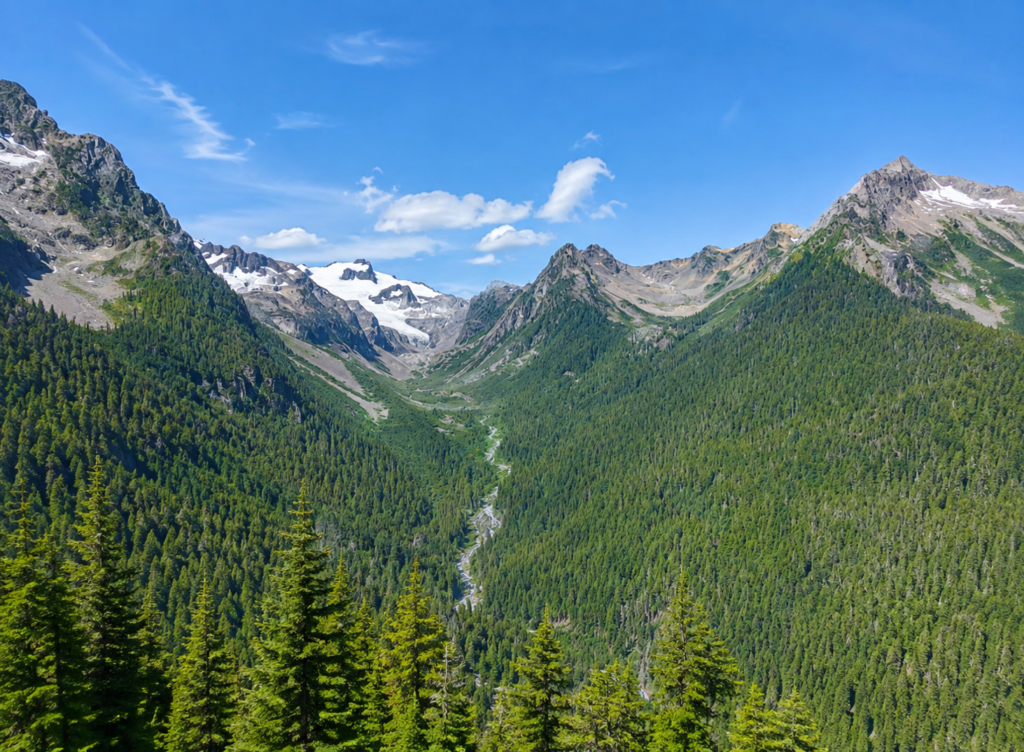
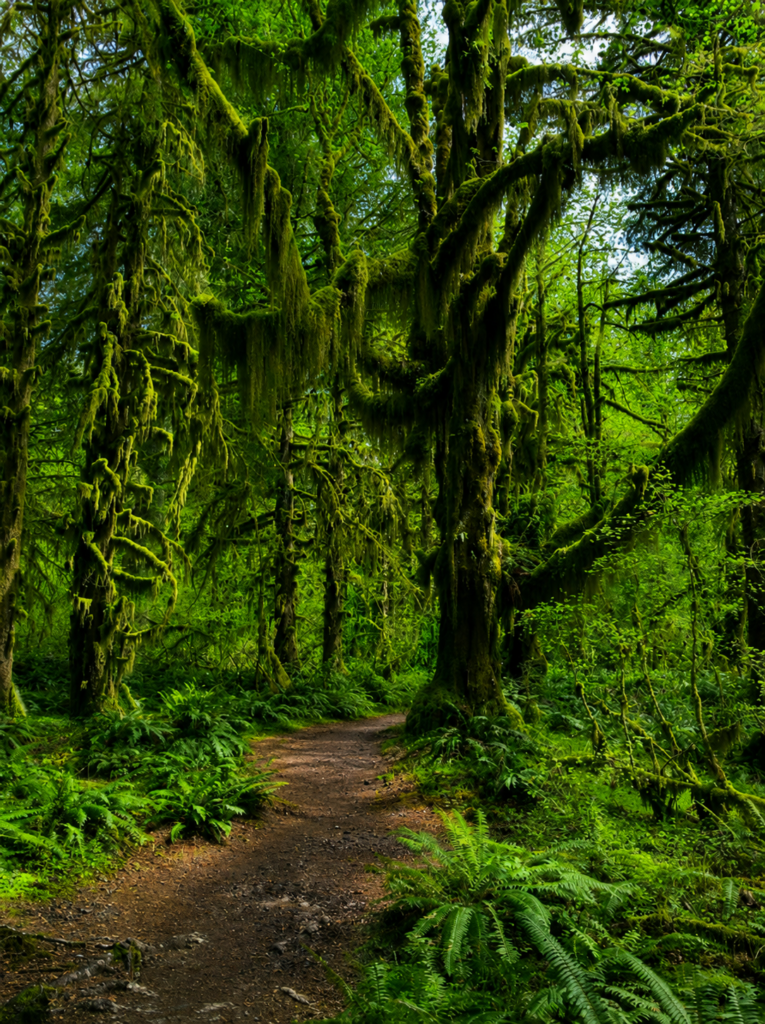
Most of this trail doesn’t feel like a trail so much as a very long, very green hallway. Twelve, thirteen miles of it are close to flat, cutting through some of the last old-growth temperate rainforest left in the lower 48, moss hanging off branches thick enough to block out the sky, Sitka spruce and western red cedar old enough that some of them were already large trees when the first Europeans reached this coast. Then, somewhere past mile 12, the trail stops pretending to be gentle and starts climbing toward a glacier.
What most people actually do
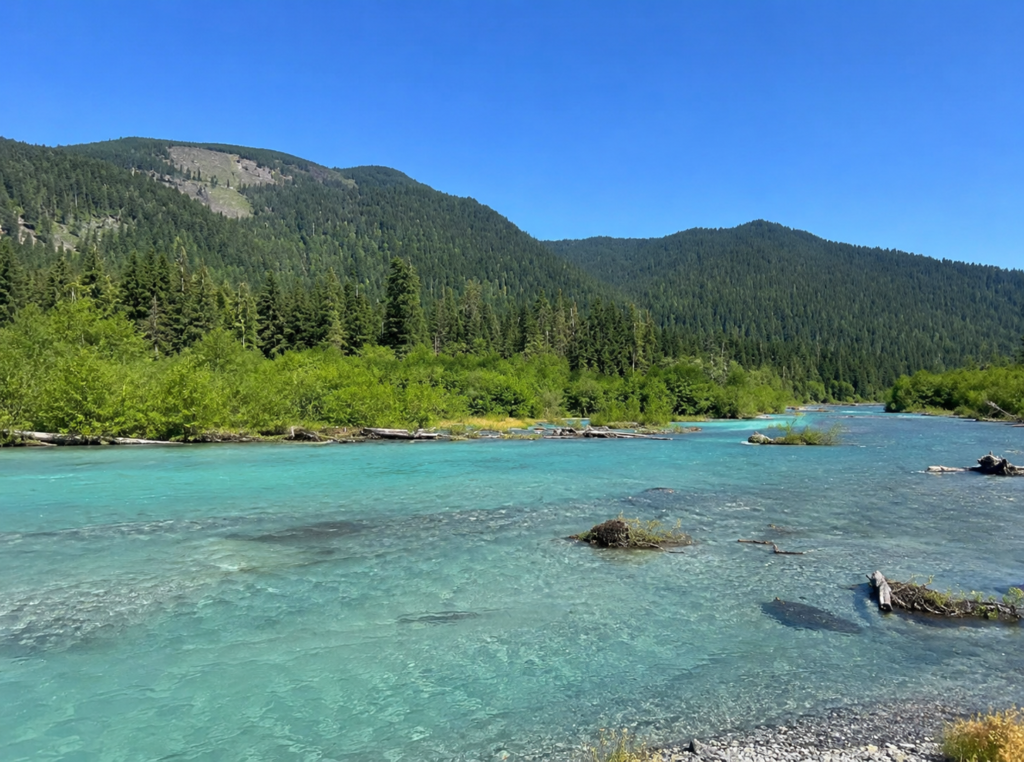
You don’t need to hike the whole thing to get something out of it. Day hikers commonly turn around at Five Mile Island (5 miles in) or the Olympus Guard Station (a bit over 9 miles in), both flat, both doable there-and-back without a permit, both giving you a real sense of the rainforest without committing to an overnight. Mineral Creek Falls at 2.7 miles is a nice shorter target if you’ve got less time. None of this section gains meaningful elevation, which is either a relief or slightly disorienting depending on how used you are to trails that make you work immediately.
What the full trip actually is
Getting to Glacier Meadows, the base camp near Blue Glacier, is 17.3 miles one way, about 3,700 feet of gain, almost all of it packed into the final five miles after the trail crosses the Hoh Bridge around mile 12.6. This is not a day hike for anyone. It’s a backpacking trip, typically two days each way at minimum, and it requires a wilderness camping permit reserved in advance, not something you decide to do on a whim at the trailhead. Add another 0.9 miles and 700 feet past Glacier Meadows if you want the actual glacier viewpoint, which you do, because that’s the whole point of coming this far.
A few unbridged river crossings show up in the upper section, usually requiring you to take your boots off, and they can run high enough to turn people around entirely depending on snowmelt and recent rain. Check conditions at the ranger station before you commit. This isn’t a formality.
The glacier at the end of it
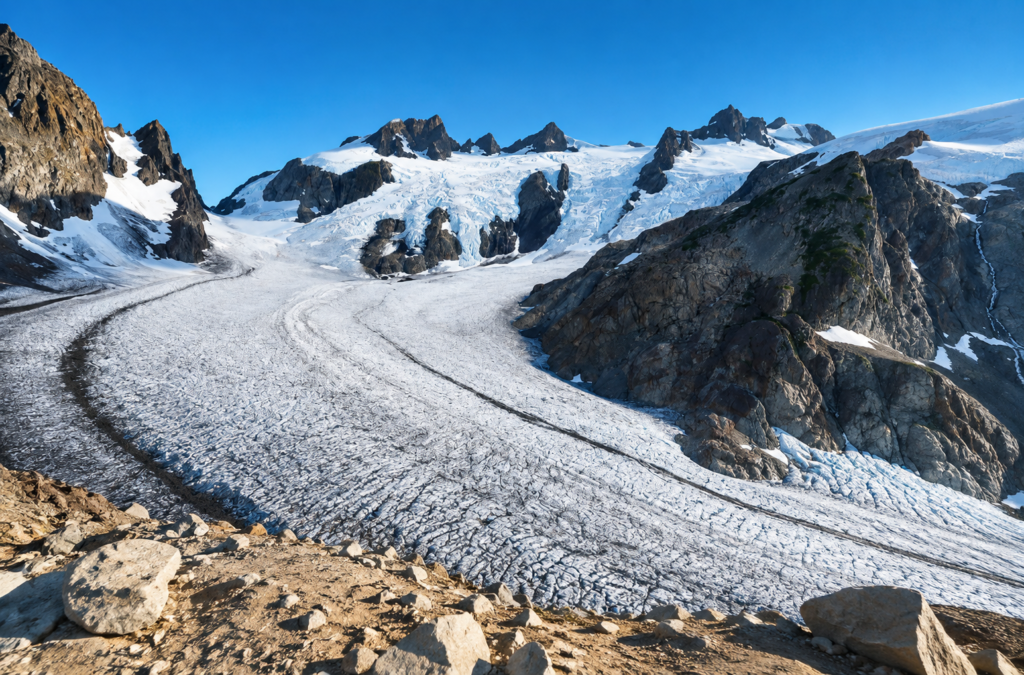
Blue Glacier is the largest ice sheet in Olympic National Park, about 900 feet thick at its deepest, and it sits at one of the lowest elevations for a glacier anywhere at this latitude on the planet, which only works because this corner of Washington gets absurd amounts of precipitation, up to 170 inches a year. It’s also shrinking. In 1800 it stretched roughly 3.4 miles down the valley; by 2000 that had dropped to 2.7 miles. You’re not just looking at a glacier, you’re looking at a fairly well-documented record of it disappearing.
Why anyone was even out here in the first place
Mount Olympus wasn’t climbed successfully until August 13, 1907, when eleven members of a Seattle climbing club called The Mountaineers reached the true summit. That’s late, for American mountaineering. The interior of the Olympic Peninsula stayed essentially unmapped by outsiders until an Army expedition pushed through in 1890, and even then it took another 17 years before anyone stood on the actual highest point. The Hoh River Trail is the same approach those early parties used, more or less, walking the valley floor before turning uphill toward the ice. Fifty years after that first ascent, scientists built a research station near Blue Glacier during the 1957 International Geophysical Year, and people have been tracking this glacier’s retreat in some form ever since.
Logistics that’ll actually affect your day
Olympic National Park’s Hoh entrance gets genuinely congested in summer, June through September, with reported wait times of one to two hours between 10am and 4pm. Arrive early or arrive late, not in the middle of the day. Overnight permits for the higher camps (Lewis Meadow, Elk Lake, Glacier Meadows) need to be reserved ahead of your trip, and Lewis Meadow, about 10 miles in, is the last site where campfires are allowed. Bears are around, bear wire or canisters are required at most sites.
Did you make it all the way to the glacier, or did the rainforest alone convince you that was far enough? Tell us where you turned around. 👇